
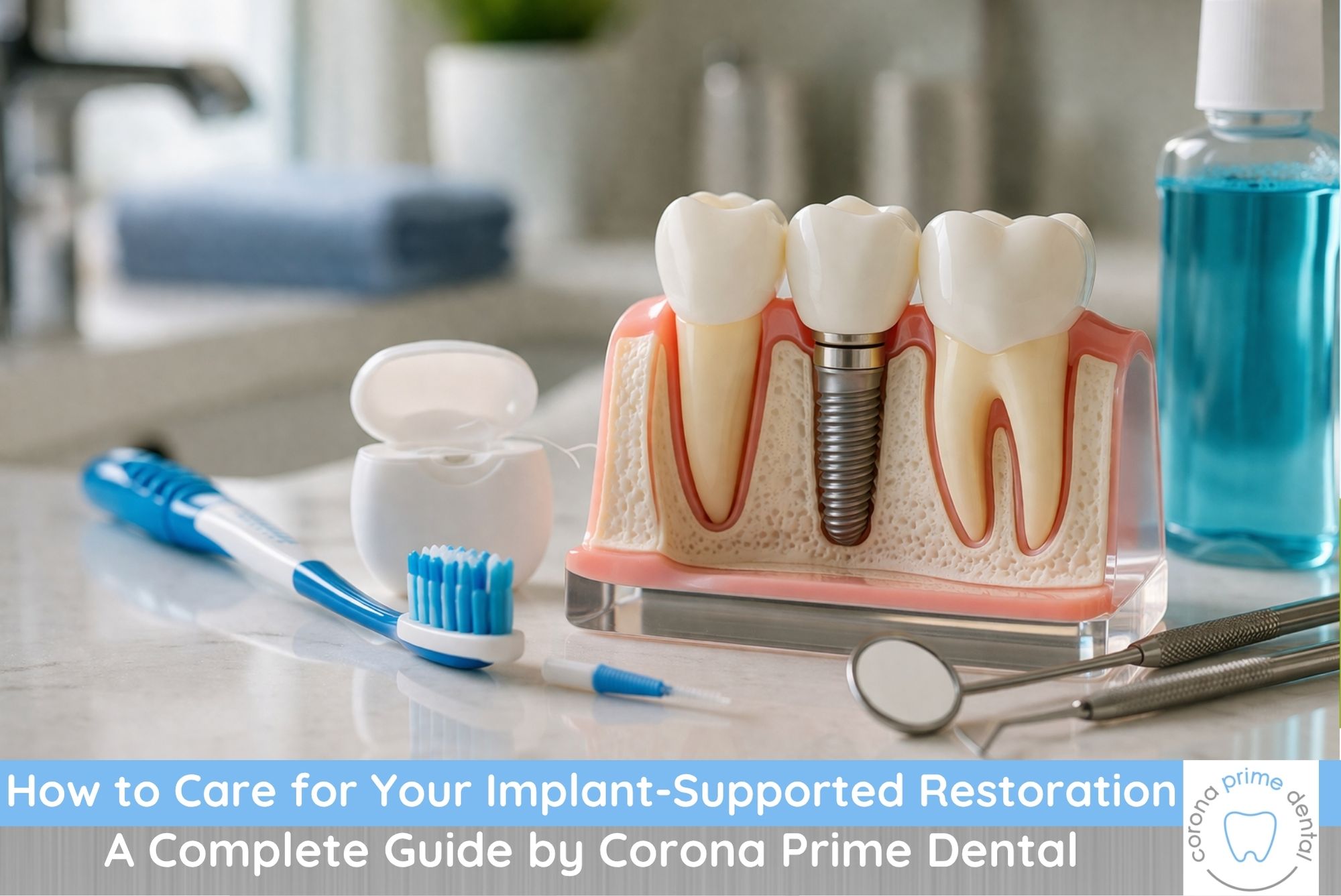
A Complete Guide from Corona Prime Dental
Dental implants have transformed modern dentistry, offering a durable, natural-looking solution for missing teeth. If you’ve invested in an implant-supported restoration—such as a crown, bridge, or denture—proper care is essential to ensure its longevity and maintain your oral health.
At Corona Prime Dental, we believe that patient education is just as important as treatment. This comprehensive guide will walk you through everything you need to know about caring for your implant-supported restoration so you can protect your smile for years to come.
What Is an Implant-Supported Restoration?
An implant-supported restoration is a dental prosthetic (crown, bridge, or denture) that is securely anchored to dental implants placed in your jawbone. Unlike traditional dentures or bridges, implants provide:
- Superior stability
- Improved chewing function
- A natural appearance
- Long-term durability
However, while implants themselves cannot decay, the surrounding tissues and supporting structures still require diligent care.
Why Proper Care Matters
Even though dental implants are made from biocompatible materials like titanium, neglecting oral hygiene can lead to complications such as:
- Peri-implant mucositis (inflammation of the gums)
- Peri-implantitis (bone loss around the implant)
- Implant failure in severe cases
Maintaining a consistent care routine helps protect your investment and ensures long-lasting results.
Daily Care Tips for Implant-Supported Restorations
1. Brush Twice Daily
Use a soft-bristled toothbrush and non-abrasive toothpaste to clean your teeth and restoration. Focus on:
- The gumline around the implant
- The crown or prosthetic surface
- Hard-to-reach areas
Electric toothbrushes can be especially effective for thorough cleaning.
2. Floss Every Day
Flossing is critical for removing plaque and debris around implants. Consider:
- Implant-specific floss or super floss
- Water flossers for gentle yet effective cleaning
- Interdental brushes for wider spaces
3. Use Antibacterial Mouthwash
An antimicrobial rinse can help reduce bacteria and prevent gum inflammation. Choose alcohol-free options to avoid irritation.
4. Avoid Harmful Habits
Protect your restoration by avoiding:
- Chewing ice or hard objects
- Using your teeth as tools
- Smoking or tobacco use (which increases implant failure risk)
5. Maintain a Healthy Diet
A balanced diet supports gum health and overall oral wellness. Limit sugary and acidic foods that can contribute to inflammation.
Professional Maintenance Is Essential
Even with excellent home care, regular dental visits are crucial.
Routine Checkups
Visit Corona Prime Dental every 6 months (or as recommended) for:
- Professional cleanings
- Implant evaluation
- Early detection of issues
Specialized Cleanings
Your dentist or hygienist may use tools specifically designed for implants to avoid scratching the surface while effectively removing plaque.
Signs You Should See Your Dentist Immediately
Contact your dentist if you notice:
- Red, swollen, or bleeding gums
- Persistent bad breath
- Pain or discomfort around the implant
- Loosening of the restoration
- Difficulty chewing
Early intervention can prevent more serious complications.
Long-Term Care Tips
- Wear a nightguard if you grind your teeth
- Keep chronic conditions (like diabetes) well-managed
- Stay consistent with oral hygiene routines
- Follow all aftercare instructions from your dentist
Frequently Asked Questions (Q&A)
Q1: How long do implant-supported restorations last?
With proper care, dental implants can last 20+ years or even a lifetime, while the restoration (crown, bridge, or denture) may need replacement after 10–15 years.
Q2: Can dental implants get cavities?
No, implants cannot decay. However, the surrounding gum and bone can become infected if not properly maintained.
Q3: Is flossing really necessary if I have implants?
Absolutely. Flossing removes plaque and bacteria around the implant, helping prevent gum disease and implant failure.
Q4: Can I use a regular toothbrush?
Yes, but a soft-bristled toothbrush is recommended. Many patients benefit from electric toothbrushes for more effective cleaning.
Q5: Are water flossers safe for implants?
Yes, water flossers are highly recommended for implant care. They help clean around the implant gently and effectively.
Q6: What happens if I don’t clean my implant properly?
Poor hygiene can lead to peri-implantitis, which can cause bone loss and eventually lead to implant failure.
Q7: Do I still need dental checkups if I have implants?
Yes. Regular visits are essential for monitoring your implant and maintaining overall oral health.
Q8: Can smoking affect my implant?
Yes. Smoking significantly increases the risk of implant failure and delays healing.
Q9: Is caring for implants different from natural teeth?
The routine is similar, but extra attention is needed around the implant site using specialized tools like interdental brushes or floss.
Q10: What is the best toothpaste for implants?
Use a non-abrasive toothpaste to avoid scratching the restoration surface.
Trust Corona Prime Dental for Your Implant Care
At Corona Prime Dental, we are committed to helping you achieve and maintain a healthy, confident smile. Whether you need routine maintenance or have questions about your implant-supported restoration, our experienced team is here to help.
Contact Information
Corona Prime Dental
914 Washburn Avenue, Ste 2
Corona, CA 92882
Phone: (951) 737-1149
Website: coronaprimedental.com
Book an Appointment:
https://coronaprimedental.com/appointments/