
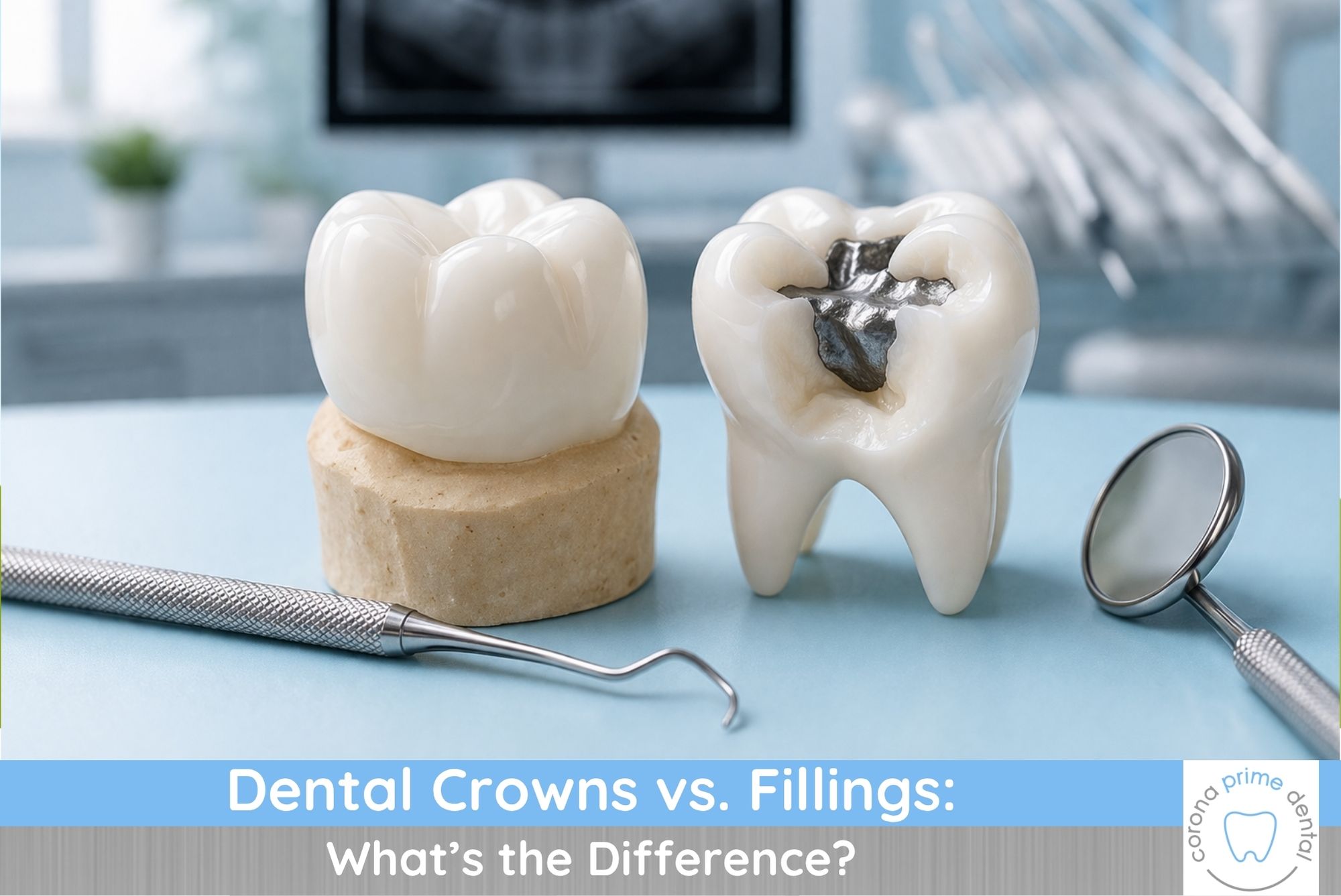
When it comes to restoring damaged or decayed teeth, two of the most common treatments your dentist may recommend are dental fillings and dental crowns. While both serve the purpose of repairing teeth and restoring function, they differ significantly in their structure, purpose, and when they are used.
At Corona Prime Dental, patients often ask which option is best for their situation. This guide breaks down the key differences between crowns and fillings, helping you make an informed decision about your oral health.
What Is a Dental Filling?
A dental filling is a restorative treatment used to repair minor to moderate tooth decay or damage. After removing the decayed portion of the tooth, your dentist fills the area with a material such as composite resin, porcelain, or amalgam.
When Are Fillings Recommended?
- Small to medium cavities
- Minor cracks or chips
- Early-stage tooth decay
- Cosmetic improvements for slightly damaged teeth
Benefits of Fillings
- Quick and minimally invasive procedure
- Preserves most of your natural tooth
- Cost-effective compared to crowns
- Typically completed in one visit
What Is a Dental Crown?
A dental crown is a custom-made cap that covers the entire visible portion of a tooth. It is used when a tooth is too damaged or weakened to be restored with a filling alone.
When Are Crowns Recommended?
- Severe tooth decay
- Large fillings that weaken the tooth
- Cracked, fractured, or worn-down teeth
- After root canal treatment
- To restore dental implants
Benefits of Crowns
- Provides full protection and strength
- Restores function and appearance
- Long-lasting solution (often 10–15 years or more)
- Prevents further damage to the tooth
Key Differences Between Crowns and Fillings
| Feature | Dental Filling | Dental Crown |
| Coverage | Partial (fills a cavity) | Full tooth coverage |
| Best For | Minor damage or decay | Severe damage or weakened teeth |
| Procedure Time | Usually one visit | Typically two visits |
| Durability | Moderate | High |
| Cost | Lower | Higher |
| Tooth Preservation | More natural tooth retained | More reshaping required |
How to Know Which Option You Need
The choice between a crown and a filling depends on the extent of the damage:
- If the tooth structure is still strong and intact → Filling
- If the tooth is weakened or significantly damaged → Crown
At Corona Prime Dental, your dentist will evaluate your tooth using advanced diagnostic tools and recommend the most appropriate treatment based on your long-term oral health.
Why Choosing the Right Treatment Matters
Selecting the right restoration is essential for:
- Preventing further decay or damage
- Maintaining proper bite alignment
- Avoiding future costly procedures
- Preserving your natural teeth for as long as possible
Delaying treatment or choosing the wrong option can lead to complications such as infection, tooth fracture, or even tooth loss.
Dental Crowns vs. Fillings: Q&A
1. Is a crown better than a filling?
Not necessarily. A crown is better for severely damaged teeth, while a filling is ideal for minor decay. The “better” option depends on your specific condition.
2. How long do fillings last?
Fillings typically last 5–10 years, depending on the material and oral hygiene habits.
3. How long do dental crowns last?
Crowns can last 10–15 years or longer with proper care.
4. Does getting a crown hurt more than a filling?
Both procedures are performed under local anesthesia, so you should feel minimal discomfort. Crowns may involve more preparation, but they are not typically painful.
5. Can a filling turn into a crown later?
Yes. If a filling fails or the tooth becomes more damaged over time, it may need to be replaced with a crown.
6. Are crowns more expensive than fillings?
Yes, crowns generally cost more because they require more materials, lab work, and multiple visits.
7. Which option looks more natural?
Both modern fillings and crowns can look very natural. Porcelain crowns and composite fillings are designed to match your tooth color.
8. Can I eat normally after treatment?
- Fillings: Usually immediately (after numbness wears off)
- Crowns: Temporary crowns require caution; permanent crowns allow normal eating
9. Do crowns require special care?
No special care is needed beyond regular brushing, flossing, and dental checkups.
10. How do I know if I need treatment?
Common signs include:
- Tooth pain or sensitivity
- Visible holes or cracks
- Discoloration
- Difficulty chewing
If you notice any of these symptoms, it’s best to schedule an exam promptly.
Trust Corona Prime Dental for Expert Restorative Care
At Corona Prime Dental, we are committed to providing personalized, high-quality dental care. Whether you need a simple filling or a full dental crown, our experienced team ensures your treatment is comfortable, effective, and long-lasting.
Contact Information
Corona Prime Dental
914 Washburn Avenue, Ste 2
Corona, CA 92882
Phone: (951) 737-1149
Website: coronaprimedental.com
Book An Appointment: https://coronaprimedental.com/appointments/